
Mesopotamian Culture: The Foundation of Civilization Between Two Rivers
Mesopotamian culture laid the foundations of civilization through writing, laws, religion, art, and science in the land between the Tigris and Euphrates.
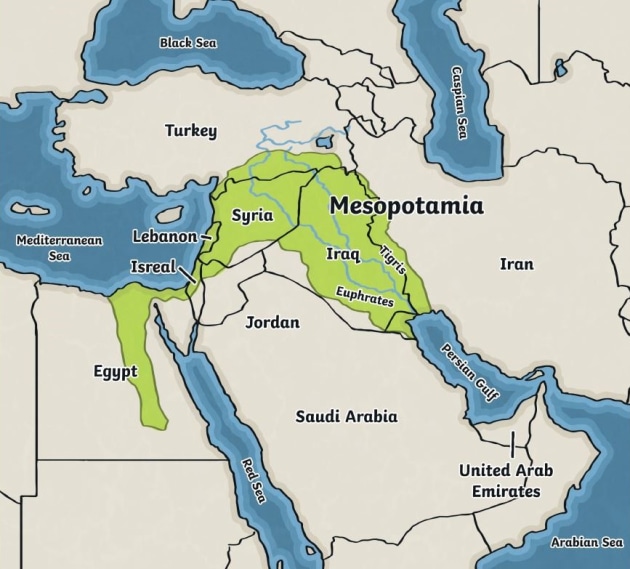
Geographic Setting and Cultural Origins
Mesopotamian culture developed in the fertile region between the Tigris and Euphrates rivers, an area often referred to as the “Cradle of Civilization.” This land, located in present-day Iraq and parts of Syria and Turkey, supported early agriculture due to its rich soil and seasonal flooding.
The availability of water and fertile land allowed small settlements to grow into complex cities, giving rise to some of the earliest known civilizations, including the Sumerians, Akkadians, Babylonians, and Assyrians.
Social Structure and Daily Life
Mesopotamian society was highly organized and hierarchical. Kings and priests held the highest authority, followed by merchants, artisans, farmers, and laborers. Slaves, often prisoners of war or debtors, occupied the lowest social level.
Daily life revolved around agriculture, trade, and family. Most people lived in mud-brick houses, worked the fields, or practiced crafts such as pottery, weaving, and metalwork. Extended families played a central role in social organization and economic survival.
Religion and Belief Systems
Religion shaped nearly every aspect of Mesopotamian culture. The people practiced polytheism, believing in many gods who controlled natural forces and human destiny. Each city had its own patron deity, believed to protect and guide the population.
Temples, especially towering stepped structures known as ziggurats, dominated city skylines. Priests performed rituals, sacrifices, and divination to interpret the will of the gods, as Mesopotamians believed disasters were signs of divine displeasure.
Writing, Education, and Knowledge
One of Mesopotamia’s greatest contributions to human civilization was the invention of cuneiform writing. Initially developed for record-keeping, it later evolved to include literature, legal texts, prayers, and scientific observations.
Education was mainly reserved for scribes, who trained for years to master writing on clay tablets. Through these records, Mesopotamians preserved myths, trade records, laws, and historical events.
Law, Governance, and Order
Mesopotamian culture placed strong emphasis on law and order. Kings ruled as representatives of the gods and were responsible for justice and protection.
The most famous legal document from this era is the Code of Hammurabi, which established written laws covering trade, family life, labor, and punishment. These laws reflected the belief that justice was essential for social stability, even though penalties varied by social class.
Art, Architecture, and Innovation
Mesopotamian art focused on religious devotion, royal power, and daily activities. Sculptures, cylinder seals, relief carvings, and pottery often depicted gods, kings, animals, and mythological scenes.
Architectural achievements included city walls, temples, palaces, and irrigation systems. Innovations such as the wheel, sailboat, plow, and advanced irrigation transformed transportation, farming, and trade.
Science, Mathematics, and Astronomy
Mesopotamians made significant advances in mathematics and science. They developed a base-60 number system, which influenced how time is measured today, including 60 seconds in a minute and 360 degrees in a circle.
Astronomy was closely linked to religion, as celestial movements were believed to reveal messages from the gods. Mesopotamian scholars recorded eclipses, planetary movements, and calendars used for agriculture and rituals.
Trade, Economy, and Cultural Exchange
Mesopotamia lacked many natural resources, which encouraged long-distance trade. Merchants exchanged grain, textiles, and crafted goods for metals, stone, and timber from distant regions.
These trade networks helped spread Mesopotamian ideas, technologies, and cultural practices across the ancient world, influencing neighboring civilizations.
Legacy of Mesopotamian Culture
Mesopotamian culture laid the groundwork for many aspects of modern civilization, including writing systems, legal codes, urban planning, and scientific thinking.
Although these civilizations eventually declined due to warfare, environmental challenges, and invasions, their cultural achievements continue to shape human history and understanding of early civilization.