
Assyrian Civilization: Military Power, Administration, and Empire in Ancient Mesopotamia
The Assyrian civilization was known for its military strength, administration, architecture, and influence across ancient Mesopotamia and beyond.
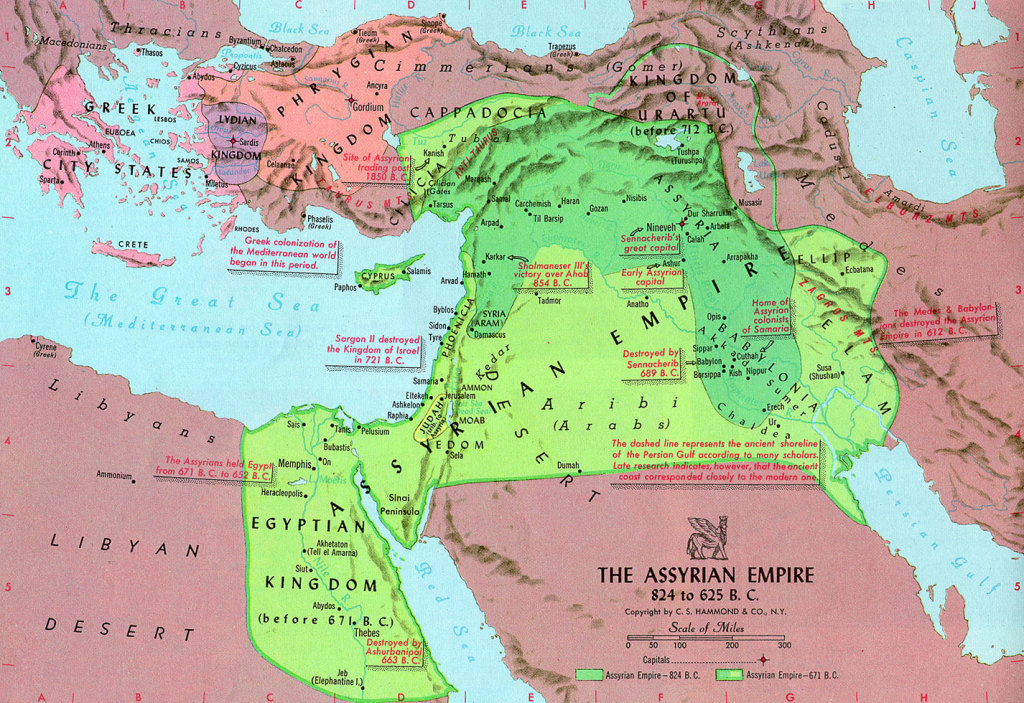
Geographic Setting and Early Development
The Assyrian civilization emerged in northern Mesopotamia along the upper reaches of the Tigris River, in what is now northern Iraq and parts of Syria and Turkey. Unlike the fertile southern plains of Sumer and Babylon, Assyria’s terrain included hills and plateaus, encouraging both agriculture and military defense.
Early Assyrian settlements such as Ashur grew into important trading and administrative centers, laying the foundation for a powerful regional state.
Rise of the Assyrian Empire
Between the 14th and 7th centuries BCE, Assyria transformed from a regional kingdom into one of the largest empires the ancient world had ever seen. Through relentless expansion, Assyrian rulers controlled territories stretching from Egypt to Persia.
Kings such as Tiglath-Pileser III, Sargon II, Sennacherib, and Ashurbanipal played key roles in building and maintaining imperial dominance through military reform and centralized rule.
Military Organization and Warfare
The Assyrians are best remembered for their highly organized and disciplined military. They developed one of the first professional standing armies, equipped with iron weapons, siege engines, cavalry, and advanced tactics.
Warfare was used not only for conquest but also as a tool of intimidation. Assyrian reliefs often depicted battles and punishments, reinforcing their reputation as a fearsome power and discouraging rebellion.
Administration and Governance
Despite their military image, the Assyrians were skilled administrators. Conquered territories were divided into provinces governed by officials loyal to the king.
Roads, messengers, and record-keeping systems allowed efficient communication across vast distances. Deportation and resettlement of populations were used to prevent revolts and integrate diverse regions into the empire.
Society and Daily Life
Assyrian society was hierarchical, with the king at the top, followed by nobles, priests, soldiers, merchants, farmers, and slaves. Loyalty to the king and the state was strongly emphasized.
Everyday life included farming, trade, craftsmanship, and religious observance. Cities were densely populated, and homes were typically constructed from mud brick, while palaces and temples were built on a monumental scale.
Religion and Beliefs
Religion played a central role in Assyrian life. The Assyrians worshipped many gods, believing divine forces guided their military success and political authority.
The chief deity was Ashur, the national god of Assyria, symbolizing both religious faith and imperial power. Rituals, omens, and divination were consulted before major decisions, especially military campaigns.
Art, Architecture, and Royal Imagery
Assyrian art focused on royal authority, warfare, and religious devotion. Stone reliefs carved into palace walls depicted hunting scenes, battles, and ceremonial events with remarkable detail.
Monumental architecture included vast palaces in cities such as Nineveh, Nimrud, and Khorsabad. These structures showcased Assyria’s wealth, engineering skills, and imperial ambition.
Learning, Libraries, and Knowledge
The Assyrians inherited Mesopotamian knowledge traditions and preserved them extensively. The most famous example is the Library of Ashurbanipal at Nineveh, which contained thousands of clay tablets.
These texts covered history, medicine, astronomy, religion, and literature, ensuring the survival of Mesopotamian knowledge long after the empire fell.
Decline and Historical Legacy
By the late 7th century BCE, internal unrest, economic strain, and combined attacks from the Babylonians and Medes weakened Assyria. In 612 BCE, the capital city of Nineveh fell, marking the collapse of the Assyrian Empire.
Although politically defeated, Assyria’s influence endured. Its military organization, administrative practices, art, and record-keeping shaped later empires and remain essential to understanding the development of complex states.